Cellular Foundry

BIOPROCESSING & CELLULAR MANUFACTURING

CELLULAR FOUNDRY

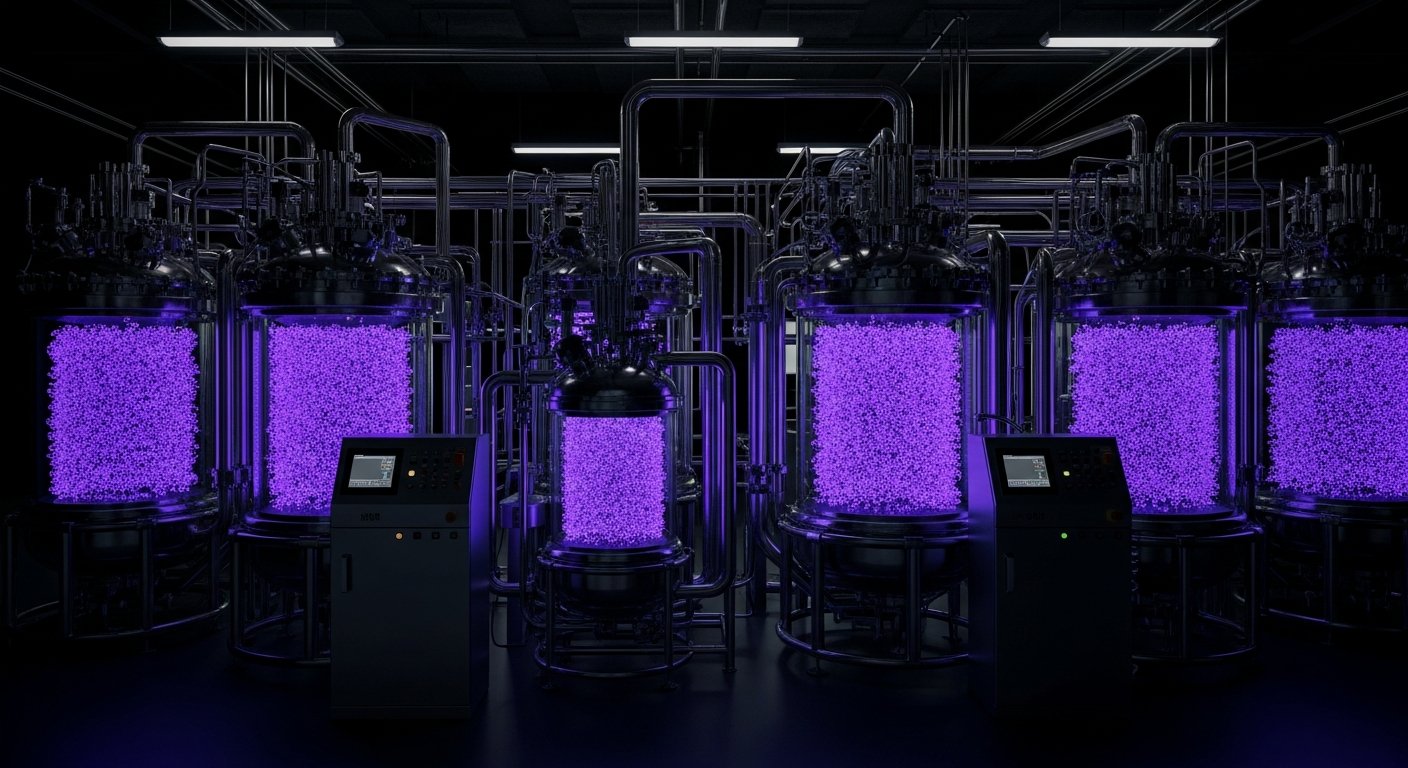
Cellular Foundry treats cells as manufacturing partners. The flagship product family is the TITAN-X bioreactor chassis — a sterile, instrumented, recipe-controlled fermentation and cultivation platform that produces enzymes, proteins, biomaterials, biosensors, and cellular-agriculture food intermediates at engineered yield and reproducibility. This is bioprocess engineering, not medical product engineering. Therapeutic, clinical, and diagnostic applications are separately regulated and explicitly outside Cellular Foundry's product scope.

Conventional bioprocessing is slow, noisy, contamination-prone, and difficult to scale. Cellular Foundry's discipline is the systematic conversion of laboratory biology craft into instrumented machine-cell capability: sterile fluidics, calibrated sensors, recipe-controlled actuators, automated assay loops, and structured logging that captures the bioreactor's process state as audit-trail evidence. Biosafety, containment, and regulatory framing are first-class engineering constraints, not afterthoughts.

Cellular Foundry — Bioprocessing and Cellular Manufacturing

Cells are slow, noisy, and reproducible only when you instrument them. We build the instrumentation.

01 — The Discipline

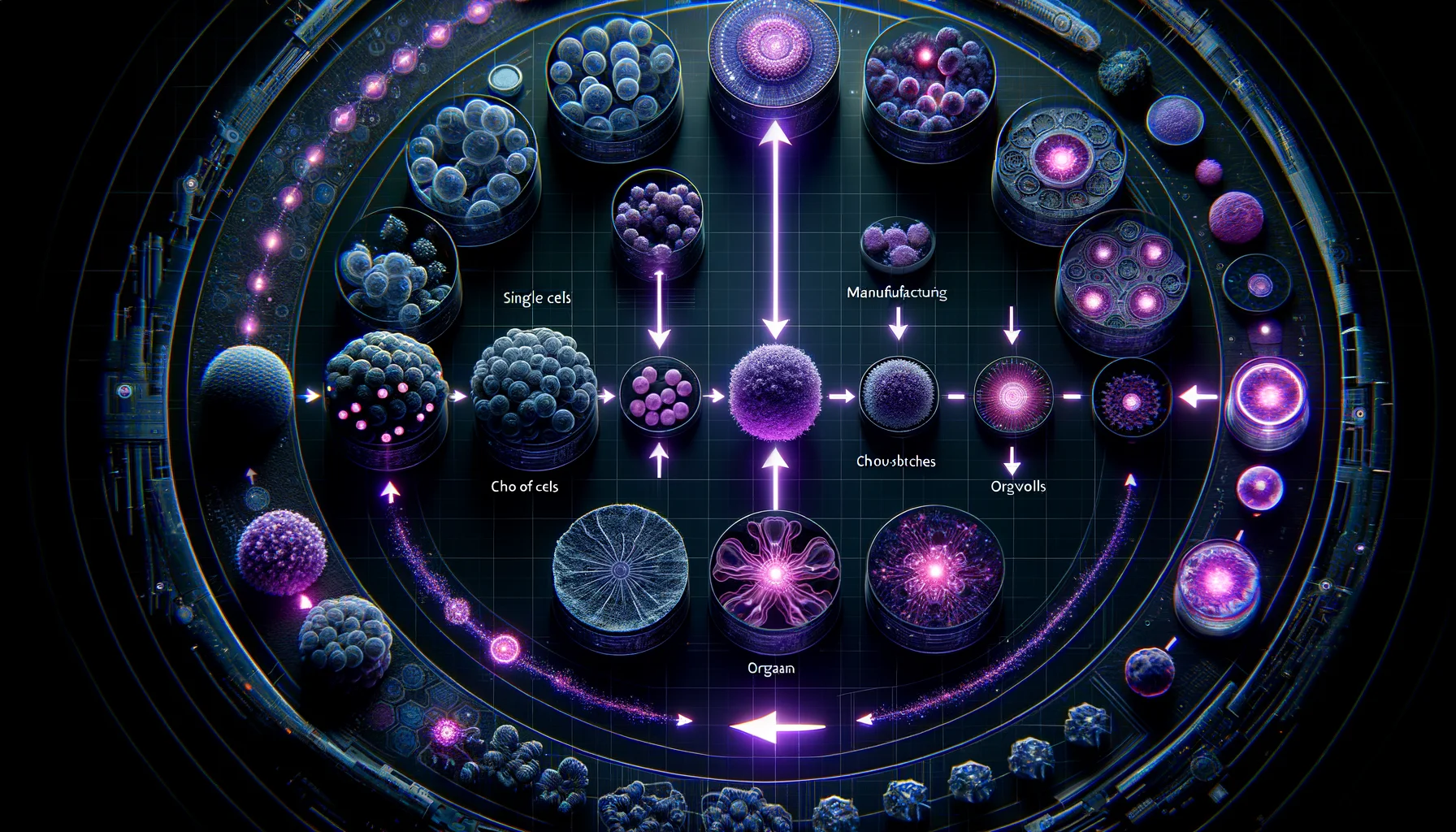
Cellular manufacturing is the controlled production of useful matter by living or cell-free biological systems — bacteria, yeast, mammalian cells, plant cells, microalgae, and cell-free expression systems. The biology side carries the chemistry (enzymes, proteins, lipids, polymers, secondary metabolites) and the systems engineering side carries the productionisation (sterile fluidics, sensor-driven recipe control, automated harvest, downstream purification, audit-grade logging). The discipline is the integration of biology with industrial-grade process engineering at scales relevant to the customer application.1

Cellular Foundry ships product across four practical categories: bulk-fermentation products (enzymes for industrial use, biofuels-grade fermentation intermediates, microbial-derived chemicals); biomaterials (cellulose-based composites, microbially-produced silk-like fibres, bacterial cellulose membranes for downstream Polymer Press integration); biosensors (engineered cell-based assays for chemical detection in water, air, soil); and cellular agriculture (food intermediates that conventional agriculture struggles to produce efficiently — structured-protein scaffolds for the Matter Kitchen platform, fat tissue for cultured-meat formulations, microbial-derived flavour compounds). Each category demands different bioreactor designs, different sensor packages, and different downstream purification trains.2

The discipline rejects the “biology will solve everything” framing that has historically attracted poor engineering. Biology is powerful but slow, and the productionisation gap is where most biotechnology ventures fail. Cellular Foundry's competitive position is the integration: not the strain (the chemistry input), not the bioreactor (the hardware input), but the calibrated, instrumented, recipe-controlled system that turns the input strain into reproducible product at industrial yield. The platform is the engineered envelope around the biology.

02 — The Bottleneck

Biology's central productionisation problem is reproducibility. A laboratory culture in a 250 mL shake flask grown by a skilled microbiologist produces results that are difficult to reproduce in a 10 L pilot bioreactor — and harder still in a 1000 L production fermenter. The reasons are mostly physical: oxygen transfer scales with reactor surface area but oxygen consumption scales with culture volume, so larger reactors are oxygen-starved unless the impeller and aeration are scaled to match. Heat removal, mixing uniformity, sterility, and shear stress all show similar scale-dependent behaviour. The result is that scaling up bioprocessing requires re-engineering at each volume tier, not just “adding more.”3

The deeper bottlenecks are contamination, genetic stability, and downstream processing. A contaminated bioreactor is a destroyed batch; sterility engineering is the dominant operational cost in many bioprocesses. Genetic drift of the production strain over multiple generations of cultivation reduces yield over time; engineering the genome for long-term stability is an active research area. Downstream processing — separating the desired product from spent biomass and culture medium — often costs more than the upstream fermentation. Each step has its own engineering envelope, and integrating them into a continuous productionised process is the core engineering challenge.4

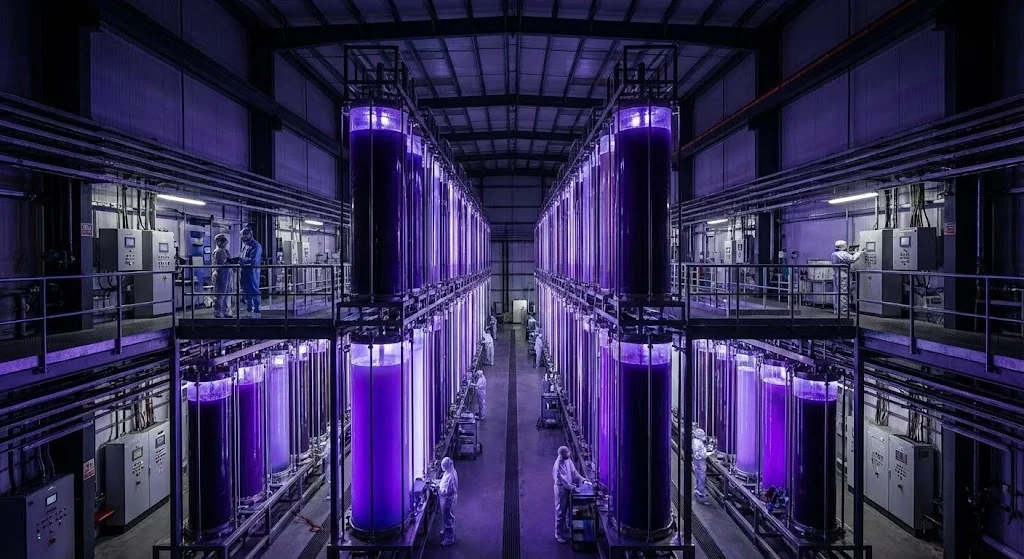
The Cellular Foundry approach addresses these bottlenecks through the foundry-cell architecture: bioreactor + integrated sensor mesh + automated sterile fluidics + recipe-driven actuator control + inline downstream processing. Each cell instance is the productionisation of a specific biological process; the foundry as a whole is the library of these instances. Customer applications specify the product, the production rate, the regulatory tier (industrial / food-grade / research-only), and the foundry assembles the cell from the library of validated subsystems.

03 — The Foundry Cell: TITAN-X Bioreactor Chassis

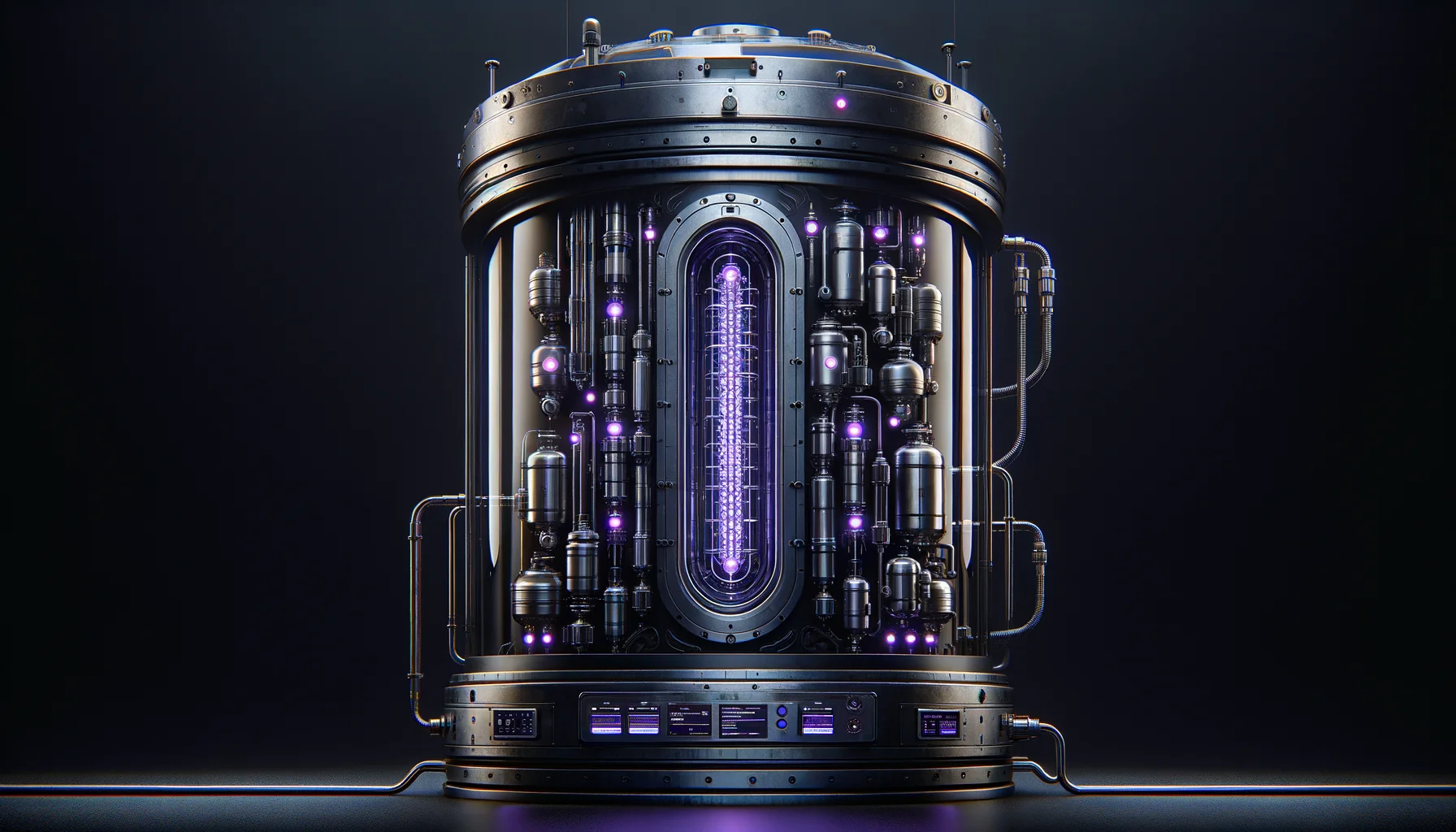
The TITAN-X bioreactor chassis is the platform of the Cellular Foundry product line. Three named scale variants (TITAN-X Bench, TITAN-X Pilot, TITAN-X Production) share the same instrumented architecture across a 5L to 50,000L scale ladder:

THE STERILE FLUIDIC SPINE

Single-use bioreactor bags for the bench and pilot variants; CIP-and-SIP (clean-in-place / steam-in-place) stainless-steel chambers for the production variant. Sterile-locking fluidic interconnects between the bioreactor, the inline sensor blocks, the harvest pump, and the downstream processing modules. No human-operator hands inside the sterile boundary between batch start and harvest end.5

THE SENSOR MESH

Continuous in-situ measurement: dissolved oxygen, dissolved CO2, pH, conductivity, temperature, optical density, turbidity, fluorescence (for engineered-fluorescent-protein-tagged strains), pressure. Sample-loop spectroscopy (NIR, Raman) for product titre estimation in real time. Sensor data feeds the recipe controller at one-second cadence; out-of-band sensor failures escalate to the alarm tree before they affect the batch.

THE RECIPE CONTROLLER

Process-control logic specified as a structured recipe: setpoints for pH, dissolved oxygen, temperature, and feed rate over the batch cycle. Conditional branching on sensor state: switch from growth phase to production phase when optical density crosses a threshold; halt feed when dissolved oxygen drops below a critical line; harvest when product titre estimate exceeds the recipe-specified yield. The recipe is the audit-trail of the batch; every actuator command and sensor reading is logged against the recipe step that produced it.

THE INLINE ASSAY LOOP

Automated sample withdrawal at recipe-specified intervals for offline analytical chemistry: HPLC for product purity, mass spectrometry for identity confirmation, protein-electrophoresis for biological-product integrity. Results return to the recipe controller as quality measurements; a batch that fails inline QA is routed to investigation rather than to product.6

THE DOWNSTREAM PROCESSING TRAIN

Inline centrifugation, filtration, chromatography, ultrafiltration, and concentration steps integrated as continuous-flow modules. Modular design lets the same TITAN-X chassis ship into different product categories by swapping the downstream module sequence. Enzyme products require purification chromatography; biomaterials require structural curing; cellular-agriculture products require sterile harvest and chill.

TITAN-X BENCH5 L bioreactor, single-use bag, R&D and small-batch product
TITAN-X PILOT250 L bioreactor, single-use bag, process-validation and limited production
TITAN-X PRODUCTION50,000 L stainless-steel CIP/SIP, full industrial-scale fermentation
SENSOR CADENCE1 Hz continuous, inline + offline assay loops
RECIPE LIBRARYVersioned, audit-tracked process recipes per product
DOWNSTREAM MODULESCentrifuge / filter / chromatograph / concentrate / sterile-fill (modular sequence)
STERILITYSterile-lock fluidics, no human hands inside boundary during batch
AUDIT TRAILEvery actuator command + sensor reading logged against recipe step
TITAN-X CHASSIS  //  BENCH / PILOT / PRODUCTION  //  STERILE FLUIDIC + INSTRUMENTED + RECIPE-CONTROLLED

04 — Biological Product Classes

Four product categories span the Cellular Foundry product line. Each is engineered against a specific regulatory tier and a specific downstream-processing recipe.

ENZYMES (INDUSTRIAL)Cellulases, lipases, proteases, amylases; fed-batch microbial fermentation; chromatographic purification; bulk industrial regulatory tier
BIOMATERIALSBacterial cellulose membranes; recombinant-spider-silk-like fibres; microbial-derived polymer precursors; downstream into Polymer Press
BIOSENSORSEngineered-cell-based assays for chemical / metabolite detection; field-deployable cartridge format; non-medical-diagnostic regulatory tier
CELLULAR AGRICULTUREStructured-protein scaffolds; cultured-fat tissue; microbial-derived flavour compounds; food-grade regulatory tier per jurisdiction
FERMENTATION INTERMEDIATESMicrobial-produced organic acids, amino acids, vitamins; bulk chemical regulatory tier
RESEARCH REAGENTSCustom recombinant proteins for laboratory use; small-batch high-purity
OUT OF SCOPETherapeutic biologics, clinical diagnostics, gene-therapy vectors — separately regulated and not in product scope
REGULATORY TIERSIndustrial / food-grade / research-only tracked per-product with documented compliance
SIX PRODUCT CATEGORIES  //  INDUSTRIAL / BIOMATERIAL / SENSOR / FOOD / CHEMICAL / RESEARCH  //  MEDICAL OUT OF SCOPE

The product categories are explicitly bounded. Medical applications — therapeutics, diagnostics, gene therapy — are separately regulated under entirely different frameworks (FDA biologics, in-vitro diagnostics, gene-therapy vectors), and Cellular Foundry's product line does not extend into those tiers. Customer engagements that would require medical-tier regulatory framing are referred to specialised partners rather than reframed onto the TITAN-X platform.

05 — Measurement, Containment, and Ethics

Biosafety, containment, and regulatory framing are first-class engineering constraints, not afterthoughts. The TITAN-X chassis ships with the containment infrastructure required by the highest regulatory tier the platform supports (Biosafety Level 2 by default; BSL-3 variant available for specific customer applications).7

Sterility and genetic containment. Every bioreactor batch starts from a sterilised vessel with sterilised media. The fluidic spine maintains sterility throughout the batch through sterile-lock connections. Engineered strains that include genetic-modification components are physically contained: the bioreactor exhaust passes through HEPA filtration into a thermal-deactivation stage; spent biomass is sterilised before disposal. Genetic drift over multiple-generation cultivation is monitored by periodic strain re-verification (PCR confirmation of intended genomic modifications); strains showing drift are retired from production.

Regulatory boundaries. Each product category carries its own regulatory framework: industrial enzymes operate under TSCA or local equivalents; food-grade products require FDA / EFSA / regulatory equivalent approval per jurisdiction; field-deployed biosensors operate under environmental-monitoring frameworks. The TITAN-X audit trail is engineered to satisfy GMP (Good Manufacturing Practice) standards where the customer application requires it. Cellular Foundry does not ship product into a regulatory tier the platform is not validated for; mismatches are rejected during customer onboarding rather than at delivery.8

Ethics and operational responsibility. Cellular agriculture, biosensor field deployment, and synthetic-biology product lines all carry operational responsibility considerations beyond strict regulatory compliance: ecological impact of waste streams, occupational safety for plant operators, supply-chain transparency for downstream food-product customers, and informed-consent considerations for products that interface with human users. Cellular Foundry treats these as engineering specifications that the platform must satisfy, not as marketing concerns to be addressed after deployment. The audit trail extends to these dimensions through structured reporting that customer organisations can include in their own compliance and disclosure pipelines.9

What this section is not. This section is not a substitute for legal counsel, regulatory submission, or medical-device certification. Cellular Foundry's responsibility is to engineer the productionisation platform within established frameworks; the customer's responsibility is to validate that their specific use case meets the legal and regulatory requirements of the markets they serve. The platform makes regulatory compliance achievable; it does not establish that compliance unilaterally.

06 — Supplier & Integration Partners

Cellular Foundry integrates technology from across the network. The supplier-and-integration stack is the engineering of the bioprocess-to-product chain.

Matter Kitchen — Cellular-agriculture food intermediates ship into the Matter Kitchen platform as feedstock for volumetric cooking pods. Structured-protein scaffolds, cultured-fat tissue, and microbial-derived flavour compounds are the integration points.

Polymer Press — Bacterial cellulose membranes and recombinant-silk-like fibres ship as biomaterial inputs for the Polymer-V family. Specifically the food-contact and biocompatible variants where animal-derived alternatives are operationally constrained.

Foundation Kinetics — Autonomous-lab cell architecture for the bench and pilot TITAN-X variants. Scarab-class compact actuators for sterile-fluidic interconnect handling. Recipe-execution framework that coordinates wet-bench biological work with adjacent physical-manufacturing cells.

Phase Flash — Sterile water and process-fluid systems for the TITAN-X chassis. Vacuum-distilled water for the strictest sterility tiers. Concentration / evaporation modules for downstream processing.

Modular Habitats — Life-support biology integration: closed-loop air, controlled humidity, sterile-environment monitoring for the medical-adjacent and food-production habitat variants.

Aetheric Sciences — Edge-compute platform for the TITAN-X recipe controller. Real-time sensor-fusion across the multi-channel sensor mesh. Predictive modelling for batch-state estimation between offline assay points.

Brainwave Systems — Biosignal adjacency only: shared sensor-pipeline infrastructure for engineered-cell biosensors that operate by signal-pattern detection. Not a medical-product integration; Brainwave's domain is biosignal engineering, not biological assay design.

Fermat Logistics — Sigma-2 sensitive-cargo handling for biological products. Cold-chain logistics for refrigerated and frozen biologicals. Origin of the highest-priority transport-network routes (urgency-class-1 biological cargo).

Matter Kitchen → Polymer Press → Foundation Kinetics → Phase Flash → Modular Habitats → Aetheric Sciences → Brainwave Systems → Fermat Logistics →

07 — Validation Hooks

Five measurable claims define the forward roadmap. Each is intended to be a future Crystal Ball-grade prediction registration once the prediction infrastructure exists.

HOOK A — batch-to-batch yield reproducibility. Current TITAN-X Pilot scale yields show approximately 7 percent coefficient-of-variation across batches at design recipe. The forward target is 3 percent CV across batches and 5 percent CV across reactor scales (Pilot vs Production). The gating measurement is a 100-batch production run at the lower CV with the audit trail demonstrating recipe and sensor-state consistency.10

HOOK B — contamination rate. Current contamination rate is approximately 1 batch in 200 at the Pilot scale; the forward target is 1 in 2000. Achieved through improved sterile-lock fluidic engineering, additional inline filtration stages, and tighter recipe-controlled sterile-boundary monitoring. Demonstration is a 500-batch production run with the documented contamination event count.

HOOK C — genetic stability over generations. Production strains show measurable yield drift after approximately 50 generations of continuous cultivation. The forward target is 200 generations without significant drift, achieved through engineered genome stabilisation (chromosomal integration of production genes, anti-drift selection markers, periodic strain reset from cryopreserved master cells). Demonstration is a documented 200-generation production run with periodic strain re-verification and yield audit.11

HOOK D — downstream processing recovery yield. Current downstream processing for high-purity protein products recovers approximately 60 percent of the upstream-produced product. The forward target is 80 percent recovery, achieved through tighter chromatographic engineering and reduced inter-stage losses. Demonstration is a complete upstream-to-final-product mass balance at the higher recovery rate.

HOOK E — cellular-agriculture scaffold structural fidelity. Cellular agriculture's central engineering challenge is reproducing the three-dimensional structure of biological tissues (muscle, fat, connective). Current TITAN-X Pilot cellular-agriculture products achieve approximately 70 percent structural-fidelity match to natural tissue. The forward target is 90 percent fidelity, achieved through improved scaffold engineering, better growth-factor recipes, and longer maturation cycles. Demonstration is a structured-protein product with documented sensory and mechanical equivalence at the higher fidelity tier. This is engineering-program-tier; commercial market acceptance is a separate downstream consideration.12

RESEARCH REPOSITORY

Bioprocessing, synthetic biology, bioreactors, biomaterials, biosafety, and autonomous laboratory infrastructure.

Cellular Foundry is the engineering of cells as manufacturing partners. The TITAN-X bioreactor chassis is the productionisation platform: sterile fluidics, calibrated sensors, recipe-controlled actuators, and integrated downstream processing across a 5L-to-50,000L scale ladder. Product categories span industrial enzymes, biomaterials, biosensors, fermentation intermediates, research reagents, and cellular agriculture. Medical applications are separately regulated and explicitly outside the product scope. Biosafety, containment, and regulatory framing are first-class engineering constraints.

Reference Links — Bioprocessing

(wiki) Bioprocess  •  (wiki) Bioreactor  •  (wiki) Fed-Batch Culture  •  (wiki) Downstream Processing

Reference Links — Synthetic Biology & Biomaterials

(wiki) Synthetic Biology  •  (wiki) Bacterial Cellulose  •  (wiki) Cultured Meat  •  (wiki) Recombinant Spider Silk

Reference Links — Biosafety & Regulation

(wiki) Biosafety Level  •  (wiki) GMP  •  (wiki) Genetic Containment  •  (wiki) Risk Assessment

Reference Links — Autonomous Labs

(wiki) Process Analytical Technology  •  (wiki) Quality by Design  •  (wiki) Cell-Free Synthesis  •  (wiki) Single-Use Bioreactor

Bibliography
  1. Doran, P.M. Bioprocess Engineering Principles. 2nd Ed. Academic Press, 2013. ISBN 978-0-12-220851-5.
  2. Madigan, M.T. et al. Brock Biology of Microorganisms. 15th Ed. Pearson, 2018. ISBN 978-0-13-426192-8.
  3. Kayser, O. & Wynn-Williams, D. (eds.) Pharmaceutical Biotechnology: Drug Discovery and Clinical Applications. Wiley, 2012. ISBN 978-3-527-32986-1.
  4. Walsh, G. Proteins: Biochemistry and Biotechnology. 2nd Ed. Wiley, 2014. ISBN 978-0-470-66985-3.
  5. National Academy of Sciences. Biosafety in the Laboratory. National Academies Press, 1989. ISBN 978-0-309-04116-1.
Key Papers
  1. Hochrein, L. et al. "Process analytical technology (PAT) in mammalian cell culture." Biotechnol. Adv. 36, 1144–1156 (2018).
  2. Mussatto, S.I. "Recent developments in bioethanol production: A review." Biotechnol. Adv. 28, 817–830 (2010).
  3. Post, M.J. "Cultured meat from stem cells." Meat Science 92, 297–301 (2012). Foundational cellular-agriculture engineering reference.
  4. Bornhorst, J. & Bornhorst, J. The Single Use Bioreactor: Single-Use Equipment for the Biopharmaceutical Industry. 2nd Ed. CRC Press, 2018. ISBN 978-1-498-72486-9.
Endnotes
  1. Cellular manufacturing as productionisation discipline: standard bioprocess engineering vocabulary. The discipline boundaries are well-established in industrial biotechnology.
  2. Four-category product line: program structure. Each category requires distinct bioreactor design, sensor package, and downstream processing.
  3. Scale-dependent bioprocessing physics: standard engineering observation. Oxygen transfer, heat removal, mixing uniformity all scale-dependent; documented across industrial-biotechnology textbooks.
  4. Contamination + genetic drift + downstream processing as production bottlenecks: standard bioprocess engineering literature. These are the documented dominant operational costs and risks.
  5. Sterile-lock fluidic interconnects: standard biotechnology engineering. Single-use bioreactor bags + CIP/SIP stainless steel for production are industry-standard.
  6. Inline assay loop integration: engineering program. Process analytical technology (PAT) is mature in pharmaceutical industry; productionisation in cellular-agriculture and biomaterial categories is the engineering work.
  7. BSL-2 default + BSL-3 variant: standard biosafety engineering. Containment infrastructure follows established frameworks.
  8. GMP-grade audit trail: engineering program. Audit-trail infrastructure is industry-standard; productisation as a default platform capability is the engineering scope.
  9. Operational-responsibility audit-trail extension: engineering program. Goes beyond strict regulatory compliance into customer-disclosure-grade reporting.
  10. Batch-to-batch CV target: engineering program; 7%→3% CV is achievable with tighter recipe and sensor engineering.
  11. 200-generation genetic stability: theoretical extrapolation from chromosomal integration and anti-drift selection literature.
  12. Cellular-agriculture structural fidelity: engineering program. Commercial market acceptance is downstream of engineering achievement and varies by jurisdiction.