Cellular Foundry
CELLULAR MANUFACTURING & TISSUE ENGINEERING
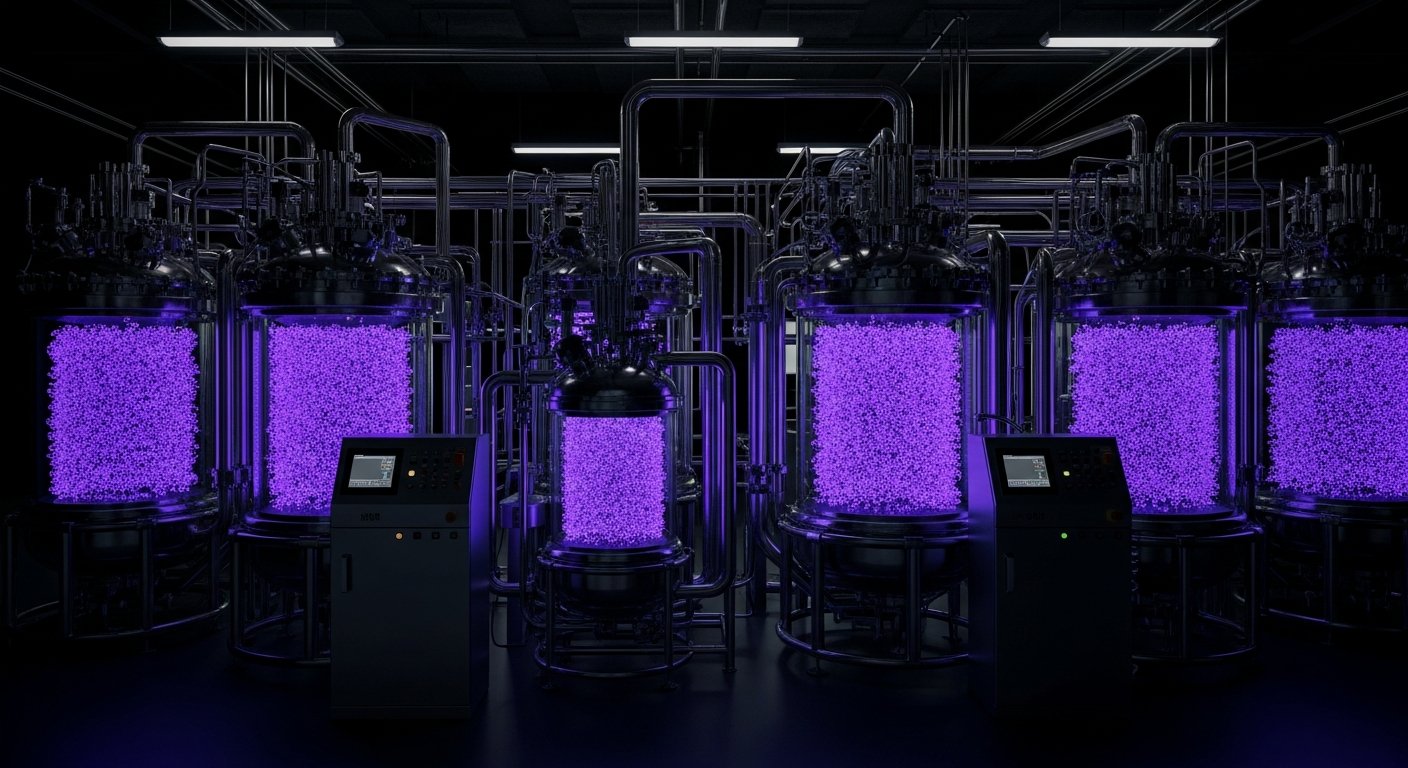
CELLULAR FOUNDRY // LAKS INDUSTRIES
We grow organs, food, and materials the way nature does — from living cells. Biology is the most sophisticated manufacturing platform on Earth. We are learning to program it.
Cells convert simple feedstocks into complex structures — proteins, tissues, organs — with high efficiency. Cellular Foundry treats biology as an engineering substrate: reading, writing, and reprogramming the instruction set of living systems to manufacture materials, tissues, and organs at industrial scale.
Self-Repair: Biological constructs heal damage at the cellular level without human intervention.
Self-Assembly: Cells organize into complex structures following genetic instruction.
Programmable: Synthetic biology tools allow specification of cellular manufacturing output with increasing precision.
CONCEPTS
01 // Three Engineering Challenges
Genetic drift, growth rate, biological control
02 // The SBC Toolkit
Standardized biological components — modular tissue parts
06 // Biocontainment
Defense-in-depth biological safety architecture
SYSTEMS
03 // The Product Hierarchy
Four tiers from cell lines to organism-scale engineering
04 // Biological Control Vectors
Viral delivery, bacteriophage sanitation, biosensing microbes
05 // Biofabrication Catalog
Product catalog — biomaterials to neural interfaces
07 // The SBC Toolkit — Deep Dive
Muscle, neural, vascular, bone, skin — five SBC classes
09 // Bioreactor Specifications
BRX-1, BRX-7, BRX-100 — desktop to industrial
RESEARCH
08 // Biological Assembly Roadmap
From raw feedstock to autonomous biological systems
10 // Division Integration
Supply and specification interfaces across Laks Industries
Field Dispatches
Laboratory results and development updates
FRONTIERS
11 // Optical Bioprogramming
Light-based genetic control — the biological tape writer
REFERENCES
Endnotes & Bibliography
Full citation index and source material