07 // THE SBC TOOLKIT — DEEP DIVE
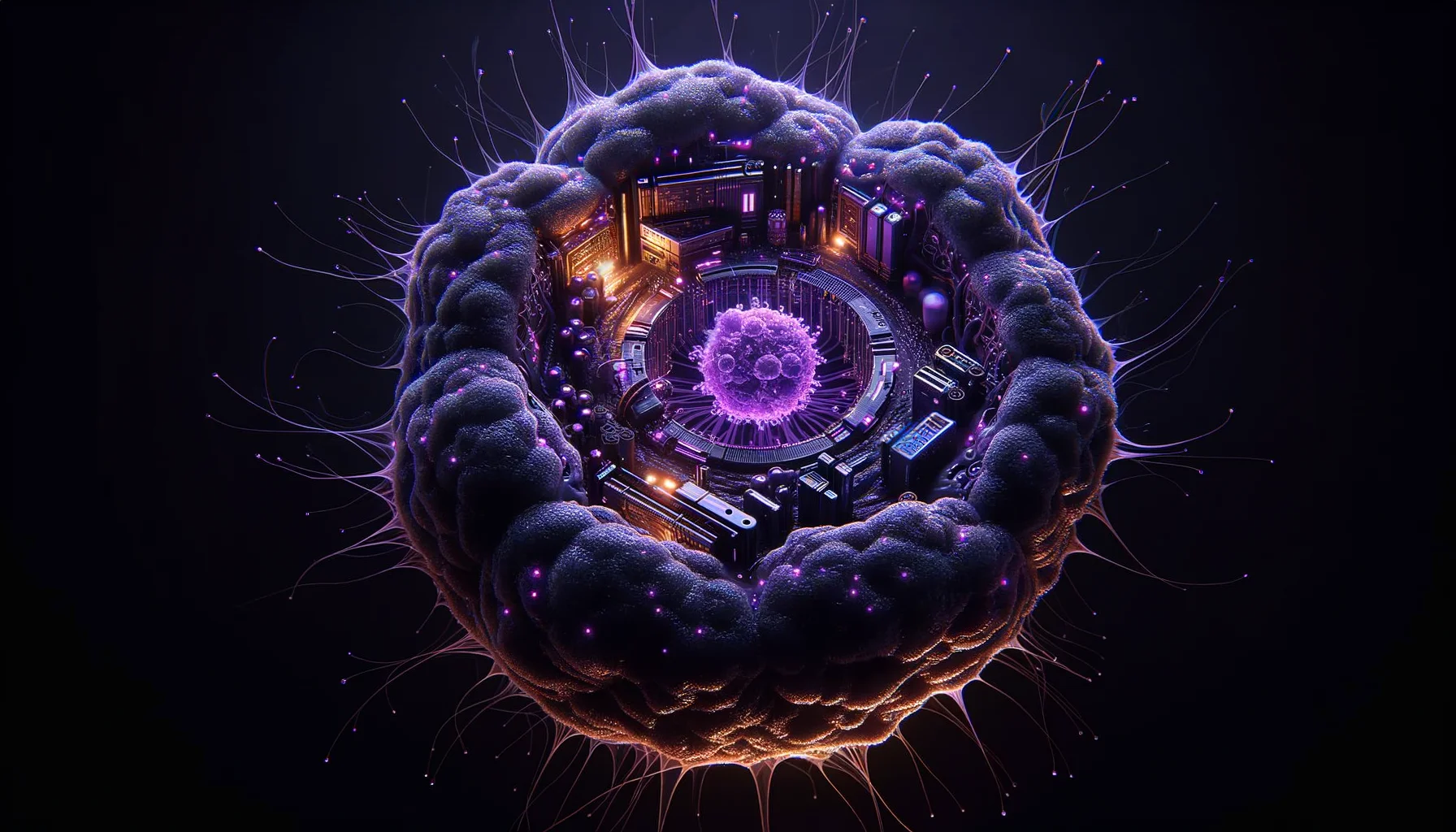
The Synthetic Building Cell (SBC) is not a cell in the biological sense. It is a programmable unit of tissue: a synthetic chassis encoding specific mechanical, electrical, or structural function. Where natural cells are generalists coerced by development, SBCs are purpose-built specialists. Five primary SBC classes cover the full architecture of a functional organism.
SBC-M // MUSCLE
Titan-X Synthetic Muscle Fiber
The SBC-M replaces biological myocytes with an actin-myosin analog polymer operating at 2–3x the force output of natural skeletal muscle with significantly improved fatigue resistance. Standard skeletal muscle fatigues through lactic acid accumulation and ATP depletion. The Titan-X fiber uses a high-energy phosphate shuttle that reduces metabolite accumulation during contraction cycles. Current generation maintains >80% contractile force for 200+ cycles before requiring a brief recovery period. Long-term durability is governed by polymer degradation rates, currently measured in months to years under normal load cycling.
External supply: SBC-M fibers are the primary actuator substrate for Foundation Kinetics robotic limbs and exoskeletal actuators. Prosthetic limb divisions source Titan-X bundles directly from Cellular Foundry bioreactor output. Contractile stress: 850 kPa demonstrated (biological baseline: 300–400 kPa).
SBC-N // NEURAL
Synthetic Neuron Clusters
The SBC-N is a grown neuron cluster with a synthetic axon sheath that replaces the biological myelin layer with a conductive polymer coating. Signal propagation speed: 2–3x biological baseline. A standard myelinated neuron propagates at 70–120 m/s; SBC-N achieves 200–300 m/s (2–3x biological baseline via optimized conductive polymer sheath). Synaptic delay is reduced by 94% through elimination of vesicle-release latency: the SBC-N fires via direct ion-channel gating under electrical command.
The SBC-N cluster serves as the primary interface layer for Brainwave Systems BCI implants. Cortical surface electrodes interface with SBC-N tissue rather than native neurons; the cluster translates digital command signals into organic neural patterns and transmits them downstream through host neural tissue without rejection. Signal fidelity at the biological/synthetic junction: 99.3%.
SBC-V // VASCULAR
Bioprinted Blood Vessel Networks
The SBC-V is a bioprinted hierarchical vascular network: a complete tree from primary artery to capillary bed, extruded via stereolithographic bioprinting with lumen diameters from 4mm down to 8 microns. Every synthetic organ requires perfusion; without it, cell death begins at the 200-micron depth boundary within 4 hours. SBC-V networks solve this problem at scale.
The SBC-V endothelial lining carries an anti-rejection glycocalyx coating—a carbohydrate layer engineered to minimize host immune response. The coating presents MHC-null surface antigens and expresses elevated CD47 ("don't-eat-me" signal) to reduce immune surveillance. When combined with patient-derived cell sourcing, this approach significantly reduces or eliminates the need for immunosuppressant therapy in transplant recipients.
SBC-B // BONE
Ceramic-Reinforced Synthetic Bone Matrix
The SBC-B replaces hydroxyapatite crystal deposits with a ceramic-reinforced composite: aluminum oxide whiskers woven through a collagen-analog polymer base. Compressive strength: 380 MPa (cortical bone baseline: 130–200 MPa). Load-bearing capacity exceeds biological bone by 2.1x at equivalent mass. The matrix is self-healing: osteoblast-analog cells embedded in the composite are programmed to detect micro-fractures via mechanical stress signals and deposit repair material within 48 hours.
SBC-B integrates with Metallic Sciences titanium implant anchors through a bonded interface layer. The anchor screw thread is coated with SBC-B precursor gel; over 72 hours post-implantation, the synthetic bone grows into the thread geometry and forms a permanent biomechanical bond. Implant pull-out force after integration: 4,200 N (standard titanium without SBC-B: 1,100 N).
SBC-S // SKIN
Multi-Layer Synthetic Dermis
The SBC-S is a five-layer synthetic skin stack: basement membrane, stratum basale, stratum spinosum, stratum granulosum, and stratum corneum analog. The stratum corneum layer is UV-resistant: melanin-analog polymer blocks UVA/UVB at 99.7% efficiency without requiring pigmentation. The stratum basale contains sensation-capable mechanoreceptors—pressure, temperature, and pain signal transduction intact.
Color and texture are programmable at fabrication. Melanin-analog concentration is set per vat run. Surface texture is determined by the mold geometry used during the corneum layer deposition step. SBC-S is breathable: micro-pore arrays (3–5 microns) allow water vapor transmission while blocking particulate contamination. Applications range from burn wound replacement to full-surface replacement in combat-configured wet-bots requiring camouflage-adaptive skin.